
Orca Head Banging
We know you care about orca and so do we.
We urgently need your help; please share this page – and the video of the orca head banging – to help raise the profile of this graphic and gravely concerning behaviour. Everyone should learn about what the orca are showing us. It is not a pretty picture, but it must be exposed. #OrcaHeadBanging
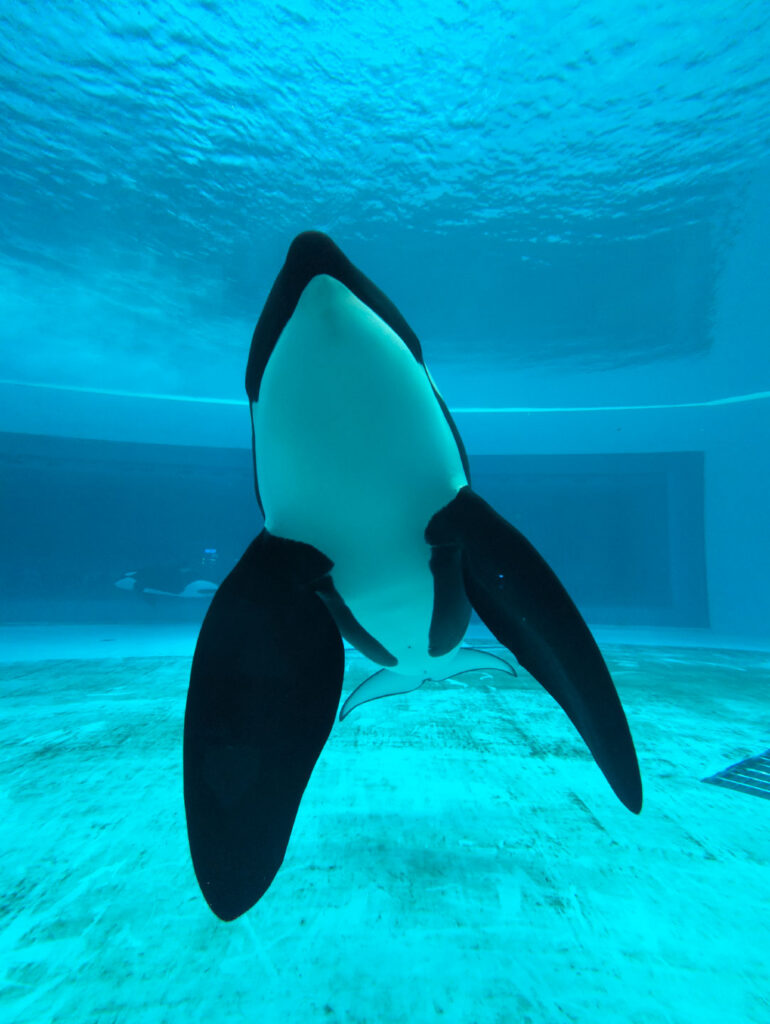
Why it matters
- The orca cannot tell us why they do it. They do not need to for us to know that something is wrong.
- Head banging is recognised in primates, elephants and people as a sign of severe welfare problems. It is no different for orca. In humans, repeated blows to the head are harmful as the damage accumulates.
- Across all the events we describe in the study, the one common factor is captivity in a concrete tank.
- No other study in world, for any species, had a data set like what we found for orca – with over 435 head bangs. This illustrates once again, that orca should not be held in captivity.
- Everyone — you, the authorities, regulators, scientists and the people working at the facilities themselves — should see what the behaviour looks like to understand the suffering of the orca.
Key Points
Thirty orca were documented head banging – and it happened in 13 different facilities.
Captive-born orca were documented head banging more than wild-born orca.
Some orca were documented head banging across spans of more than a year — Hugo over nine years, Luna over nine, Morgan over nearly four.
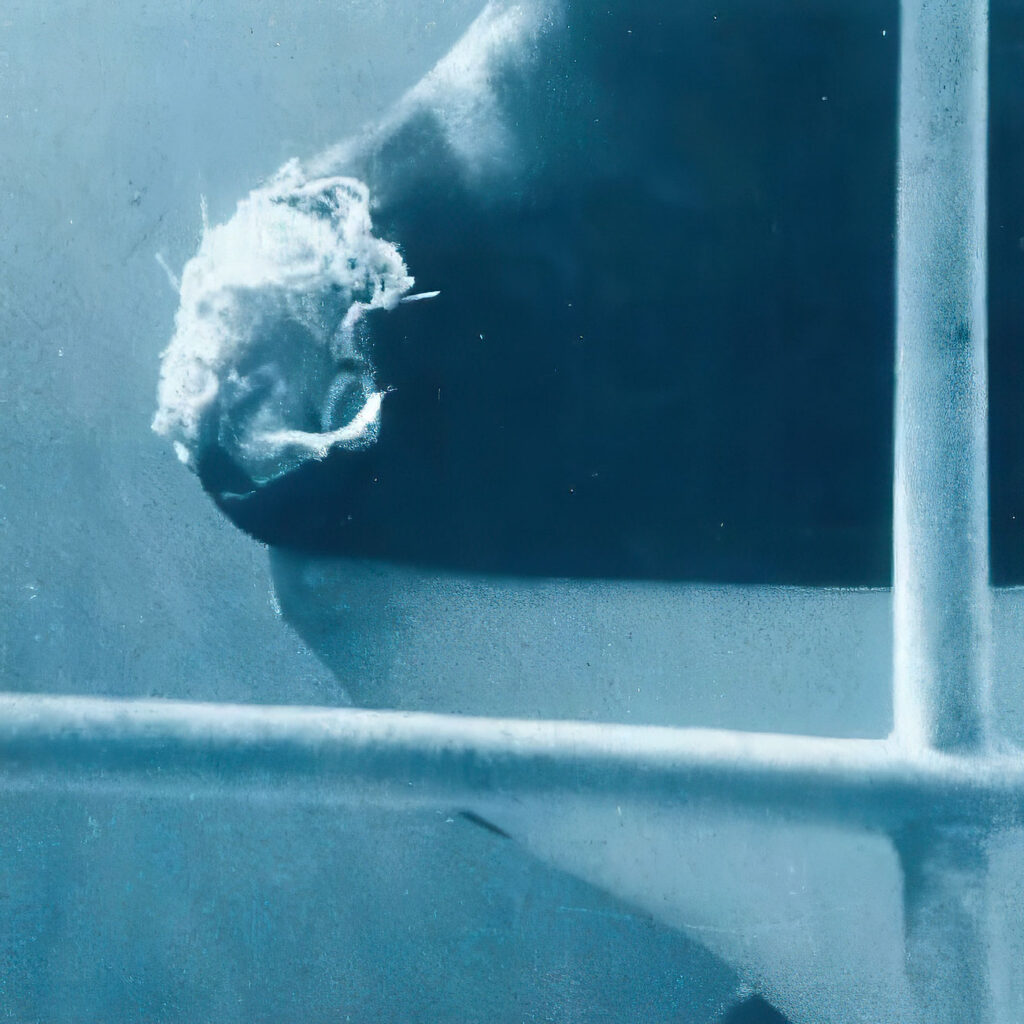
Orca held in captivity strike their heads against the concrete walls and floors, acrylic windows and viewing panels as well as the metal gates of their tanks.
Sometimes it is a tap. Sometimes it is a blow hard enough to be heard across the stadium, to send water over the wall, to create cavitation bubbles in the water, or to crack the window.
Our peer-reviewed study documents head banging by captive orca— and finds the behaviour is most common in orca born in the tanks.
The paper was published on [insert date], in the prestigious scientific journal Frontiers of Marine Science – in their special issue on cetacean (dolphins, porpoises and whales) welfare, our study is the first study of its kind to collect, classify and count these events.
Viewer advice: the footage shows animals in distress and may be upsetting.
We found 47 examples of orca head banging on video and put 18 of them into a compilation (Supplemental Material 2 – SM2).
Each clip was also described in the paper’s Supplementary Material (SM2.1), so that anyone — you, the authorities, regulators, scientists and the facilities themselves — can see what the behaviour looks like.
What we found
- 62 documented events of head banging, involving 30 orca — 18 males and 12 females — at 13 facilities in five countries (China, France, Japan, Spain and the USA).
- More than 435 individual head bangs, from single strikes to one sequence of at least 100 blows.
- Every one of them happened in a concrete tank. More than 55 orca have been held in sea pens over the years, and we found no record of head banging in any of them.
- Captive-born orca were the worst affected. One in three captive-born orca (22 of 65) has been documented head banging, against one in twenty wild-born orca (8 of 158). Second- and third-generation captive-born orca are among them — being born into a tank does not make an orca suited to it.
- Injuries are confirmed in six orca, and one death: Hugo, who broke the acrylic window of his tank at Miami Seaquarium while head banging, died nine years later of a burst brain aneurysm attributed to the behaviour.
- The industry has published almost none of it. Only six of the 62 events (9.7%) appear anywhere in the peer-reviewed literature. The rest we found in videos, news reports, court documents, whistleblower accounts and our own fieldwork. Facilities have publicly denied that it happens at all.
What needs to change
We call for an end to wild imports, an end to breeding, and the phasing-out of orca captivity, with the animals now held moved to natural-environment sanctuaries — where head banging has never been documented.
The behaviour should be recorded, reported and investigated by every facility that holds orca — and it is not. Beyond that, our conclusion is the same one the growing body of evidence keeps forcing us to acknowledge: orca are not suited to life in concrete tanks.
Read the paper
Visser, I.N., Fraleigh, D., Grimm, H., Hardie, T.M., Makowski, K. and Sommer, H. (2026). Head banging: a graphic behaviour indicative of severe welfare concerns in captive Orcinus orca. [Frontiers vol.?, DOI link] — open access.
A collaboration between the Orca Research Trust (New Zealand), the Free Morgan Foundation (The Netherlands), Global Orca Charity (USA), Ontario Captive Animal Watch (Canada) and Orca Network (USA).